
Niche Uses
Laser Distance Meters (LDMs) have become indispensable tools for professionals across countless industries. Traditionally known for providing quick and accurate measurements of distances between walls or ceilings, LDMs have evolved far beyond their original role. Today, their capabilities extend into the realms of smart home installations, renewable energy projects, and even sophisticated outdoor landscaping designs.
This article explores three highly specialized uses for LDMs:
- Smart home technology integration
- Renewable energy planning and execution
- Precision landscaping and outdoor design
These applications showcase how LDMs contribute not only to the efficiency of individual projects but also to broader goals of sustainability, accuracy, and modern living.
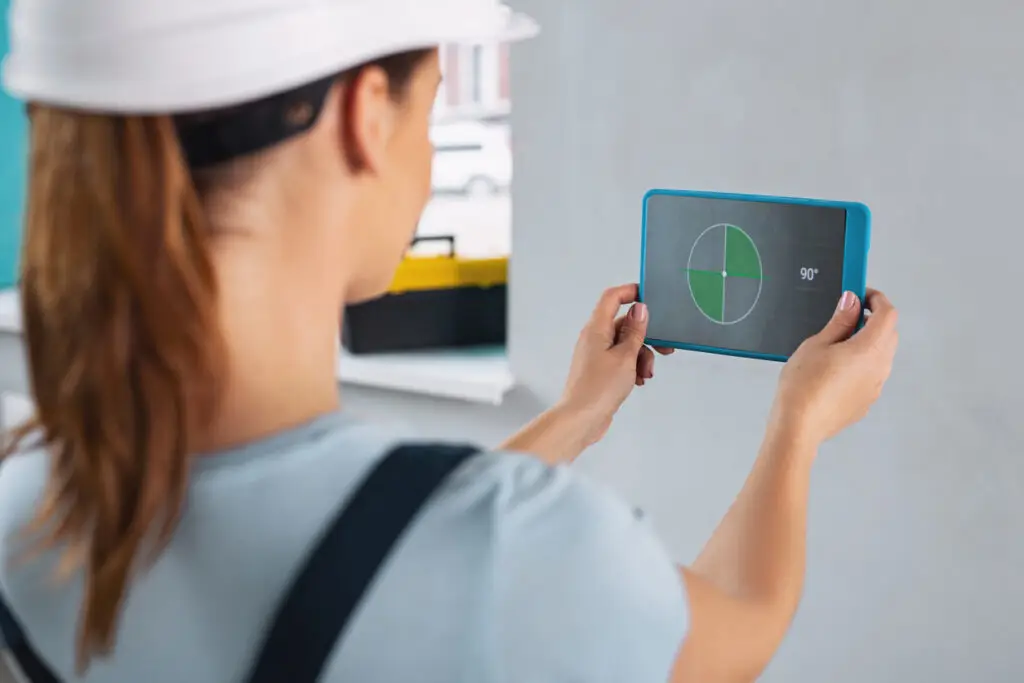
Part 1: Beyond the Blueprint – How Laser Distance Meters are Revolutionizing Smart Home Installations
The Intersection of Smart Homes and Precise Measurement
The smart home revolution is transforming how people interact with their living spaces. Home automation and the Internet of Things (IoT) have introduced interconnected systems for lighting, security, entertainment, and energy management. But behind the scenes of this seamless digital experience lies a critical element: installation accuracy.
Whether placing a motion sensor at the right height or ensuring that smart lights cast even illumination, precise measurements are essential. Here’s where LDMs step in.
Smart Lighting – Precision Where It Matters
Smart lighting has transcended simple on/off functionality. Systems like Philips Hue or Lutron Caséta allow users to customize brightness levels, color temperatures, and even mood presets via mobile apps or voice assistants.
Imagine installing a series of ceiling lights in a living room. The installer needs to:
Space fixtures evenly to prevent shadows
Maintain symmetry for aesthetic appeal
Consider throw distances for specific light spreads
LDMs offer millimeter precision, enabling technicians to measure distances from walls or between fixtures rapidly. Instead of relying on tape measures—prone to sagging or human error—installers can achieve perfectly balanced lighting layouts.
Smart Sensors – Optimizing Placement for Functionality
Motion sensors, temperature sensors, and smart thermostats are integral to modern home automation. But these devices are only as effective as their placement. For example:
A motion sensor that’s too close to a doorway may trigger false alarms.
A thermostat installed near a heat source could misread room temperatures.
LDMs enable:
Exact vertical measurements for mounting heights
Distance measurements from obstacles or furniture
Placement mapping for overlapping sensor fields
Professional installers can avoid blind spots or interference zones, ensuring that devices perform optimally.
Home Theater Setups – The Perfect Viewing Experience
Home theaters are another space where measurement precision is non-negotiable. Consider factors like:
Optimal viewing distances between screen and seating
Speaker placement for balanced surround sound
Acoustic treatment panel alignment
Audio-visual professionals use LDMs to:
Determine precise seating layouts
Position speakers at calculated angles and distances
Align projectors and screens for distortion-free images
This level of accuracy transforms a living room into an immersive cinematic space.
Integration with Digital Blueprints and Mobile Apps
Modern LDMs often connect via Bluetooth to mobile devices. This integration allows:
Direct input into home automation design apps
Instant record-keeping of room dimensions
Exporting measurements into smart home planning software
For instance, an installer measuring a wall for a video wall mount can instantly sync measurements into a CAD app to adjust placement drawings on the fly.
Smart Home Retrofitting – Solving Old Problems with New Tools
Retrofitting smart technology into older homes presents unique challenges:
Uneven walls
Non-standard room sizes
Obstructive architectural elements
LDMs help installers quickly adapt by:
Checking levelness of surfaces
Measuring complex geometries
Planning workarounds for hidden cavities or conduits
Ultimately, LDMs ensure that smart home technology is implemented seamlessly, even in properties built long before IoT existed.
Part 2: The Role of Laser Distance Meters in Renewable Energy Projects (Solar & Wind)
Renewable Energy’s Demand for Precision
The global push toward renewable energy—particularly solar and wind—has increased the demand for accurate, data-driven planning. Site assessments and installations must balance:
Optimal sun or wind exposure
Structural stability
Compliance with local regulations
Sustainable land use
Even minor measurement errors can lead to:
Misalignment of solar panels, reducing efficiency
Poor placement of wind turbines, lowering energy yield
Expensive rework due to incorrect distances or angles
LDMs bring surgical precision to every phase of renewable energy projects.
Solar Energy – Perfecting Panel Placement
Site Surveys and Layout Planning
A solar project begins with a thorough site survey. Engineers need to:
Assess roof shapes and slopes
Measure shading obstacles like chimneys or trees
Calculate usable surface area for panels
Traditional methods using tapes or manual estimation are time-consuming and error-prone. LDMs, however:
Measure roof lengths and slopes with high precision
Determine distances between mounting points
Map shadows by measuring object heights and distances
This data feeds directly into solar design software, producing:
3D models of roof surfaces
Optimal panel layouts
Energy production simulations
Structural Analysis and Mounting
Solar panels exert considerable weight on roofs or ground mounts. Engineers must ensure that structures can withstand:
Wind uplift
Snow loads
Seismic forces (in some regions)
LDMs facilitate:
Measuring the pitch and span of roof trusses
Verifying mounting hardware placement
Ensuring consistent racking spacing for panels
Accuracy in these measurements ensures safety and durability of solar installations.
Ground-Mounted Solar Arrays
For larger installations on open land, LDMs play an essential role in:
Plotting array rows with consistent spacing
Measuring fence distances to maintain property boundaries
Positioning inverters and transformer stations
Their range often exceeds 200 meters, ideal for expansive solar farms.
Wind Energy – Towering Measurements with Ground-Level Ease
Pre-Construction Site Assessments
Wind projects begin with wind resource assessments, but physical measurements remain crucial. LDMs assist in:
Measuring distances between turbine sites
Mapping terrain elevations
Verifying clearance distances from property lines or natural features
This helps engineers optimize turbine placement for:
Maximum wind capture
Minimal turbulence between turbines (wake effect)
Regulatory compliance
Tower Erection and Alignment
Erecting a wind turbine is a complex feat involving:
Massive tower sections
Nacelles weighing several tons
Rotor blades spanning over 80 meters in modern designs
Alignment errors of even a few centimeters can:
Increase mechanical stress
Reduce turbine efficiency
Cause safety hazards
LDMs allow installers to:
Measure verticality of tower sections during assembly
Align bolt patterns precisely
Verify nacelle positioning at high elevations
Some LDMs even connect to total station systems for integration into broader construction control networks.
Maintenance and Inspections
Wind turbines require routine inspections. LDMs help measure:
Blade deflection angles
Tower settling or tilting
Distances to ground-level obstacles for safety clearances
These checks ensure long-term turbine performance and structural health.
Sustainable Design and Efficient Land Use
Beyond pure measurement, LDMs contribute to sustainable planning by:
Helping minimize site disturbance
Allowing efficient use of land parcels
Assuring compliance with zoning and environmental protections
As renewable energy becomes the backbone of the global power supply, LDMs are essential tools in the sustainable energy toolkit.
Part 3: Precision in Green Spaces – Laser Distance Meters for Landscaping & Outdoor Design
Landscaping’s Modern Precision Revolution
Landscaping was once driven by rough measurements and on-site adjustments. Today, homeowners and landscape architects demand:
Geometric accuracy
Efficient material use
Aesthetic perfection
Whether crafting an elaborate garden design, installing fences, or placing pools, precision is vital.
Garden Design – From Sketches to Reality
Modern garden design blends art and science. LDMs enable landscape architects to:
Map out planting beds with exact dimensions
Maintain consistent spacing for pathways
Align decorative features symmetrically
Consider a garden design with:
Curved flower beds
Symmetrical topiary layouts
Hardscape elements like patios and pergolas
LDMs quickly measure:
Radius lengths for curves
Angles between design axes
Distances between focal points
This eliminates guesswork and ensures that digital designs translate flawlessly into physical spaces.
Fence Alignment – Defining Property Boundaries
Property lines can become contentious, especially when:
Neighbors disagree about boundary locations
Permits require strict setbacks
HOAs impose design regulations
Traditional measuring tapes risk cumulative errors over long distances. LDMs ensure:
Straight fence runs without deviation
Accurate measurement of angles for corner posts
Verification of distances from property lines
Professional installers appreciate how LDMs help avoid legal disputes and costly rework.
Pool Placement – A Game of Millimeters
Pools involve significant investment and stringent safety regulations. LDMs assist pool builders in:
Mapping excavation boundaries precisely
Ensuring pool walls are square and level
Measuring setback distances from structures or property lines
They’re equally useful in designing:
Pool decks
Integrated water features
Outdoor lighting schemes
Accurate measurements reduce excavation errors, minimizing waste and avoiding costly corrections.
Beyond construction and layout, LDMs play a crucial role in pool cladding and finishing work. Many pool owners choose to clad their pools with high-end materials such as natural stone, porcelain tiles, or custom composites. These materials can be extremely expensive, and precise measurement is critical to avoid costly errors.
In modern projects, the exact measurements captured by LDMs are often sent directly to CNC machines at the cladding manufacturer’s facility. This ensures that each tile or panel is cut to the exact dimensions required for a perfect fit.
This precision becomes even more essential when dealing with complex pool shapes. For example, ovoid or freeform pools present significant challenges because:
Each cladding piece has unique curves and angles
Tolerance for error is minimal since each piece fits like a puzzle
Misalignment can ruin the aesthetic and compromise water sealing
With LDMs, specialists can capture millimeter-level measurements along curved surfaces, vertical depths, and subtle slopes. This data allows CNC machines to fabricate pieces that align seamlessly, preserving both beauty and functionality.
Ultimately, accurate measurement during pool cladding not only guarantees a luxurious finish but also protects the client’s significant investment by preventing material waste and ensuring long-term durability.
Outdoor Living – Patios, Decks, and Beyond
Outdoor living spaces have become an extension of interior design. Homeowners invest in:
Outdoor kitchens
Fire pits
Pergolas and gazebos
LDMs provide:
Level checks for large patio areas
Distance measurements for built-in features
Alignment verification for structures with complex footprints
This ensures that outdoor spaces remain functional, safe, and visually harmonious.
Material Estimation and Cost Savings
Hardscaping projects require accurate material calculations for:
Pavers
Retaining wall blocks
Decorative stone
LDMs simplify:
Measuring surface areas
Calculating volume requirements
Minimizing waste and cost overruns
Clients and contractors alike benefit from transparent project budgeting.
Working Around Obstacles
Outdoor spaces often present challenges like:
Mature trees to preserve
Existing structures to integrate
Uneven terrain
LDMs make it easy to measure:
Irregular shapes
Clearance distances
Slopes and grade changes
This capability helps designers blend new elements into existing landscapes seamlessly.